J.B. Hunt's Equipment Dilemma: Pandemic Expansion Meets Post-Boom Reality
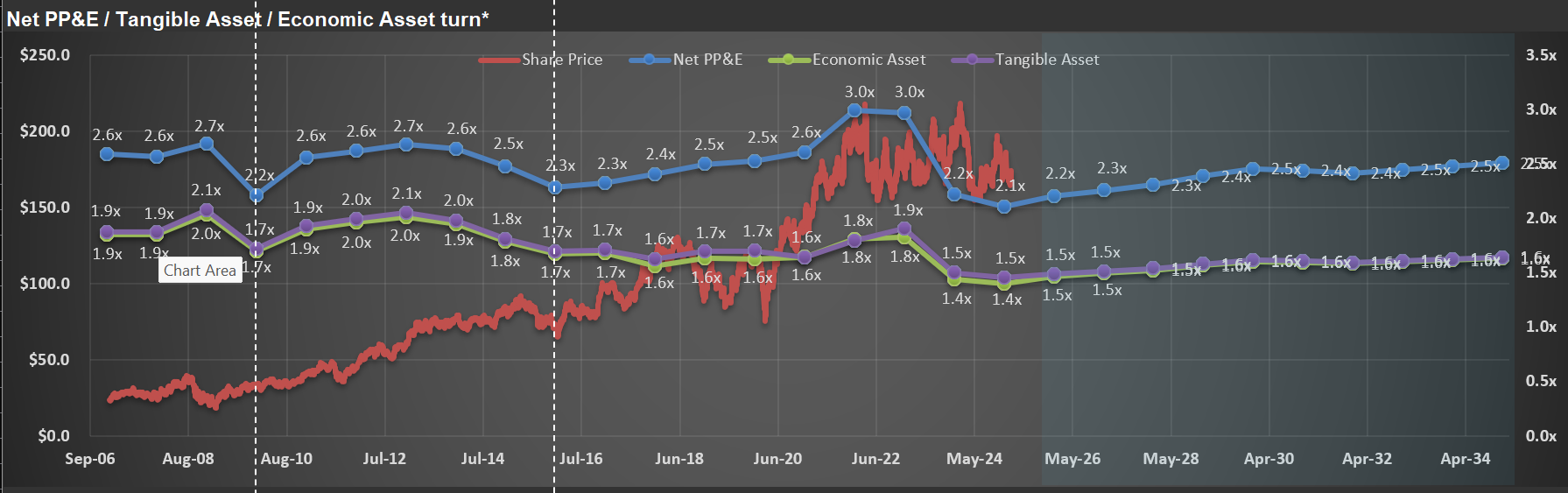
Look at what $JBHT management said during the last conference call: “…we still have really significant capacity that’s underutilized. And the cost to store that equipment is a significant headwind for us. And so as we continue to scale and grow our volumes, while also improving pricing, that’s going to be our focus and our effort. The Walmart equipment, we reported – I think we reported just over 122,000 containers at the end of 4Q. When we onboarded the Walmart equipment, all of that equipment requires a modification and we haven’t completed that work. Clearly, we just did the acquisition in, I think, the second quarter of – or end of first quarter, second quarter last year. And that equipment is tucked away in storage right now because frankly, we’re still trying to grow into the 122,000 containers that you can see we own today.”
This was a classic over-investment situation, given the strong cycle for trucking companies during the pandemic (mostly on pricing, as companies were willing to pay anything to secure transportation capacity). The result: a very low “Net PP&E turnover”—see the blue line on the chart. It is as low as in the deep recession years of 2009.
J.B. Hunt: Share Price Defies Earnings Gravity - Market Optimism or Pandemic Memory Bias?
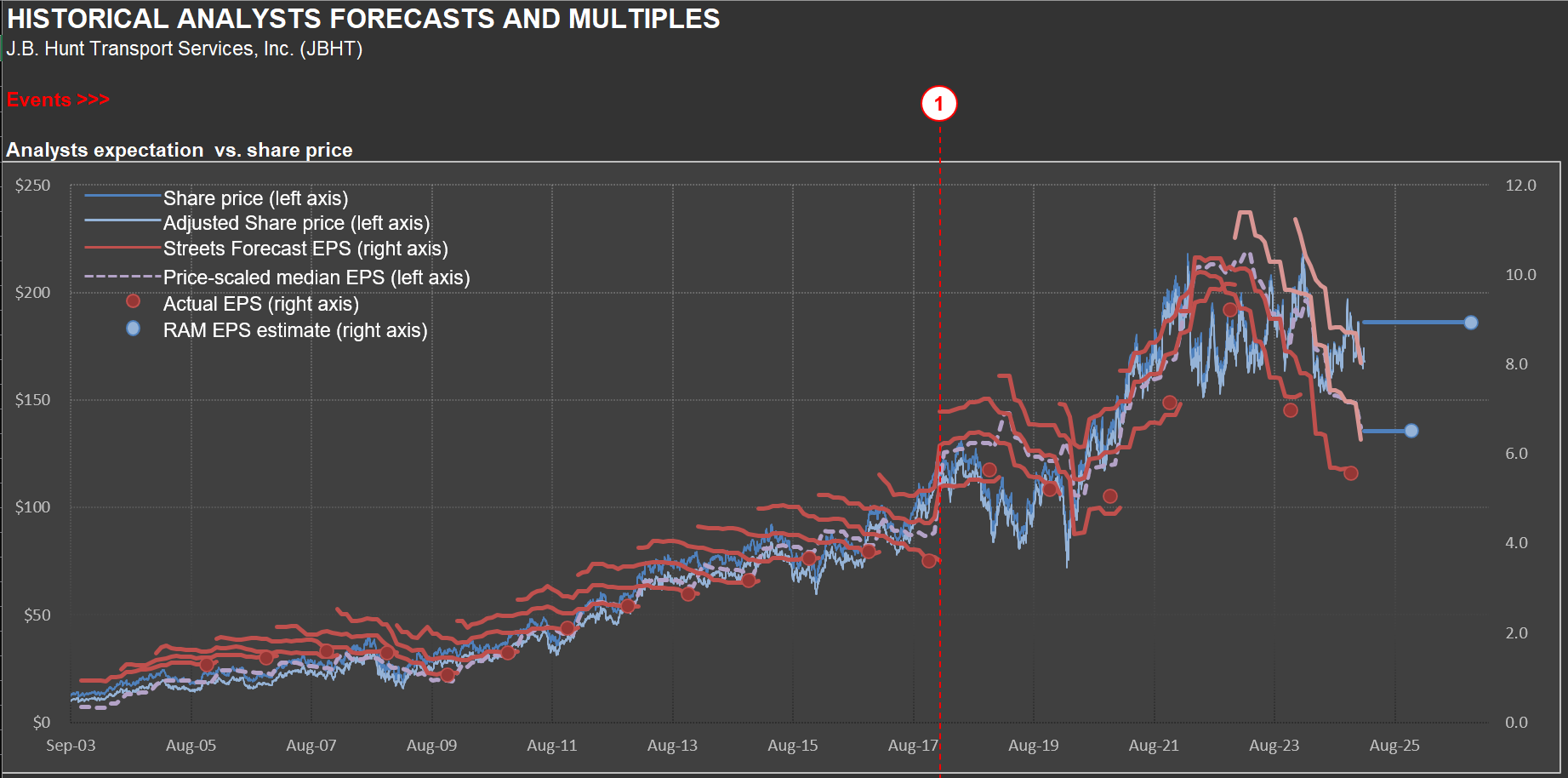
For most companies, share prices follow short-term EPS (in other words, the Market doesn’t anticipate much—it just reflects what it sees “as of now”). It isn’t different for $JBHT — see how the share price follows expected EPS on the chart. However, the current market price appears to be fighting a substantial decline in earnings. Maybe it’s because trucking companies made a disproportional amount of money during the pandemic, biasing some investors regarding how much they are willing to pay for J.B. Hunt’s earnings.
Fleet Age Dynamics: How J.B. Hunt's Minor Aging Shifts Drive Major Truck Purchase Swings
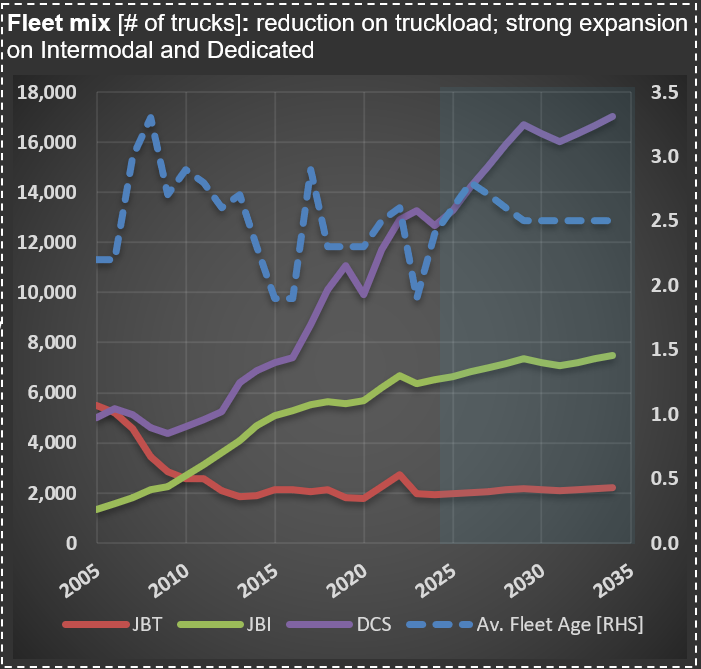
I’m working on $JBHT [J.B. Hunt] today. It is incredible how relatively small fluctuations in the average age of a trucking company’s fleet (represented by the dashed blue line on the chart) change the demand for new trucks. The company went from buying almost 6,000 trucks in 2021/2022 to something close to 3,600 trucks now.
Trucking Tonnage Trends: What ATA Data Reveals About Economic Momentum
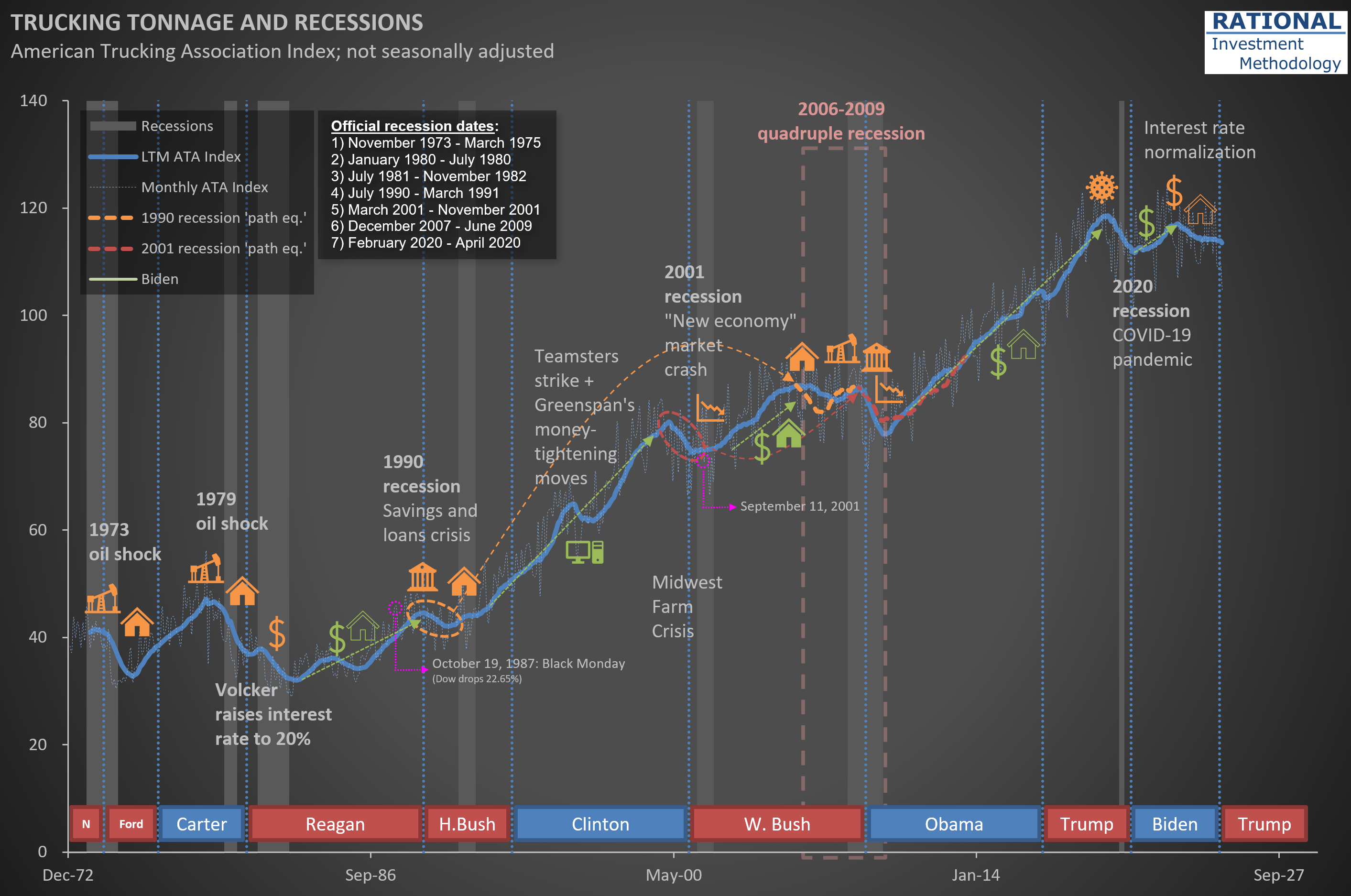
Trucking tonnage data from the American Trucking Association (ATA) reveals a persistent sluggishness in demand for trucking services. Take a look at the long-term perspective in the chart below, which helps contextualize current industry conditions within historical patterns.
The visualization offers valuable insights into freight movement trends—often considered a bellwether for broader economic activity. For those monitoring economic signals, this data point merits attention alongside other indicators when evaluating the current business cycle position.